DHT Explained: Its Role in Hair Loss

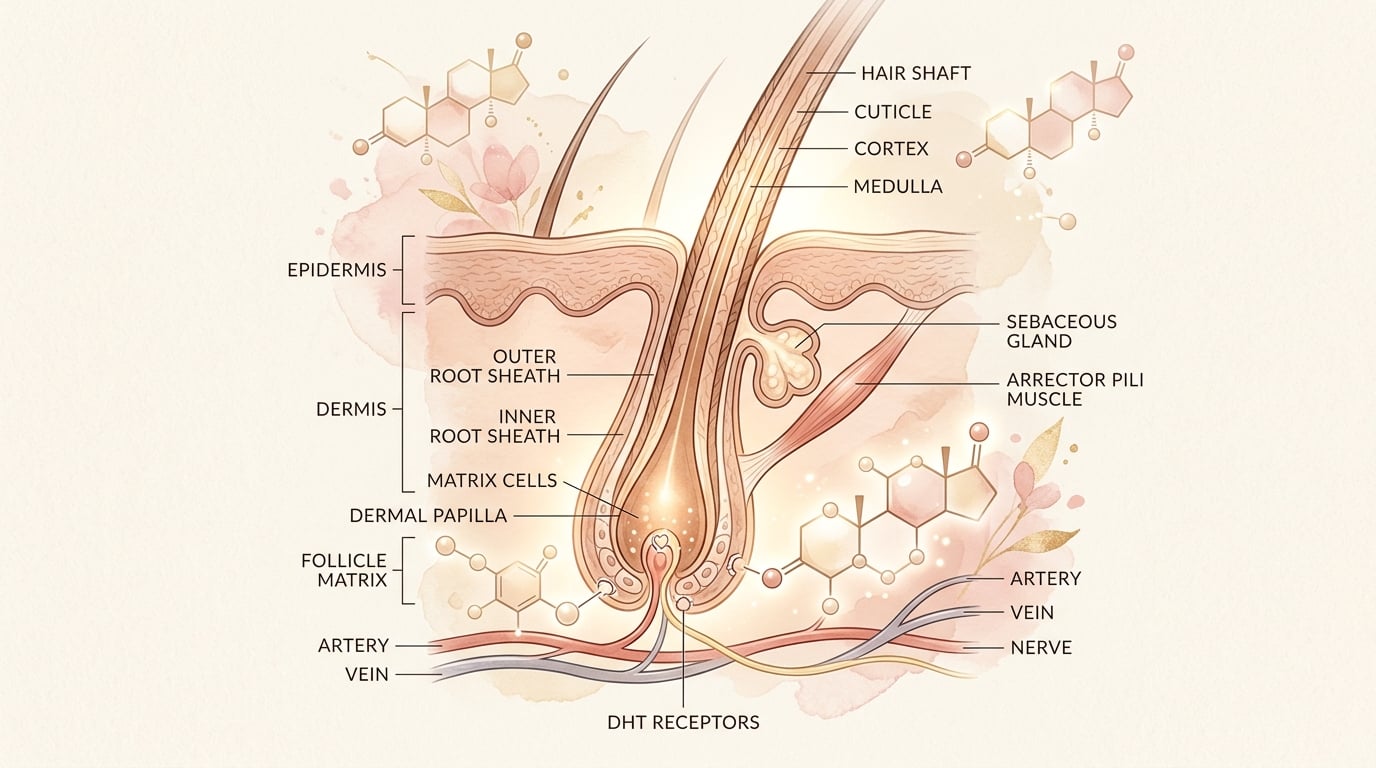
What Is DHT?
Dihydrotestosterone (DHT) is a hormone derived from testosterone through the action of an enzyme called 5-alpha reductase. While DHT plays important roles in the body, it can also contribute to hair thinning in individuals whose hair follicles are genetically sensitive to it.
How DHT Affects Hair
In susceptible people, DHT binds to receptors in the hair follicles and can gradually shrink them through a process called miniaturization. Over time, affected follicles produce finer, shorter hairs and may eventually stop producing visible hair. This is the mechanism behind androgen-related (or androgenetic) hair loss.
DHT and Women
DHT-related thinning is not just a male concern. In women, elevated androgen activity — such as in PCOS or during hormonal transitions — can contribute to scalp hair thinning, often along the part line and crown.
Physician-Guided Treatment Options
For appropriate patients, physician-guided options may be considered, including topical or oral therapies such as minoxidil and other DHT-modulating medications when medically appropriate. Each option has:
- Potential benefits for supporting hair in selected patients
- Possible side effects that must be weighed individually
- A need for physician supervision and monitoring
Important: Medications should never be started without a proper medical evaluation. Treatment decisions are always individualized.
A Comprehensive Approach
Addressing DHT-related hair loss is most effective as part of a comprehensive plan that also considers hormones, nutrition, and scalp health. Dr. Salome Masghati can help you understand whether DHT may be contributing to your hair loss and what options are appropriate for you.
Written by
Dr. Salome Masghati, MD
Board-certified OB/GYN specializing in individualized bioidentical hormone therapy for women. Dr. Masghati combines traditional medical training with a personalized, root-cause approach to help women understand their hormones and restore balance.
Medical Disclaimer: This article is for educational purposes only and does not provide medical advice, diagnosis, or treatment. Individual results vary. Hormone therapy may not be appropriate for everyone and should only be prescribed after a medical evaluation by a licensed healthcare professional.
Ready to Address Your Hormone Health?
Apply for a personalized consultation with Dr. Masghati.
Apply for a Consultation